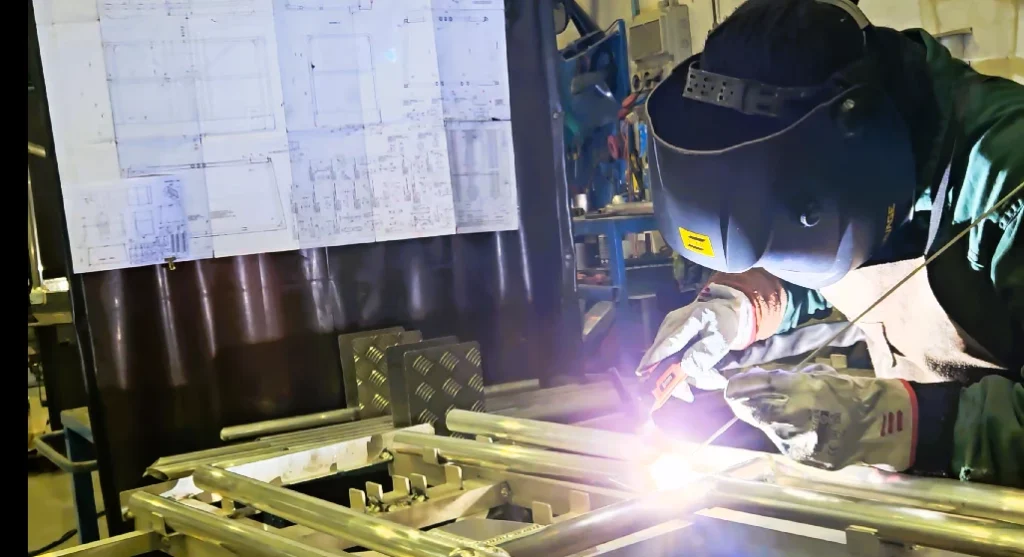
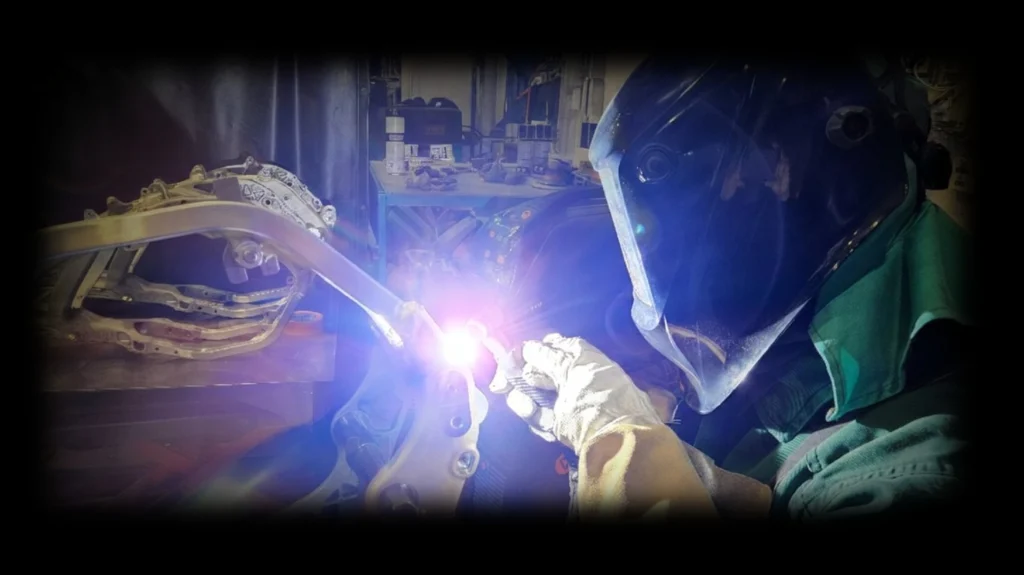
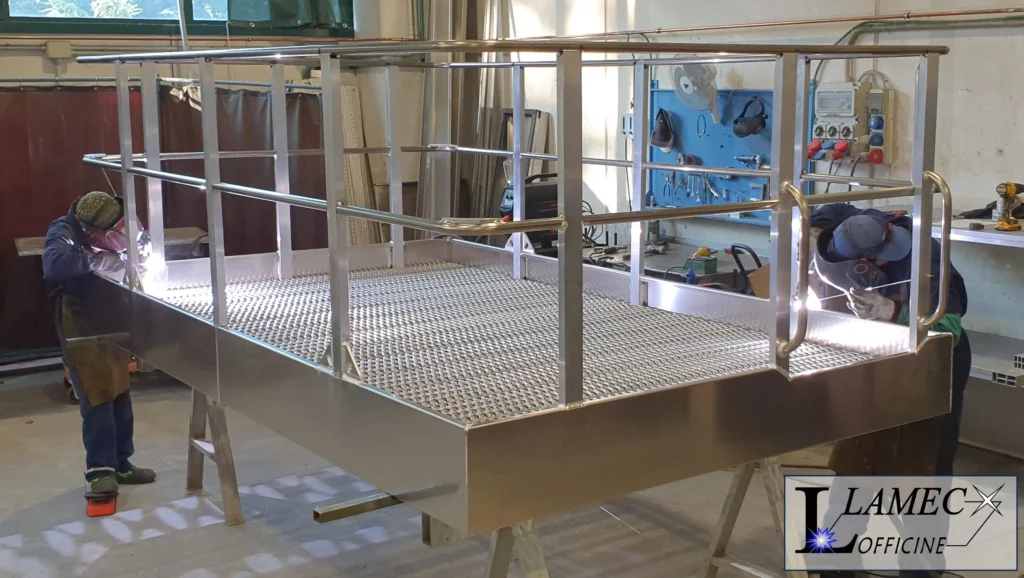
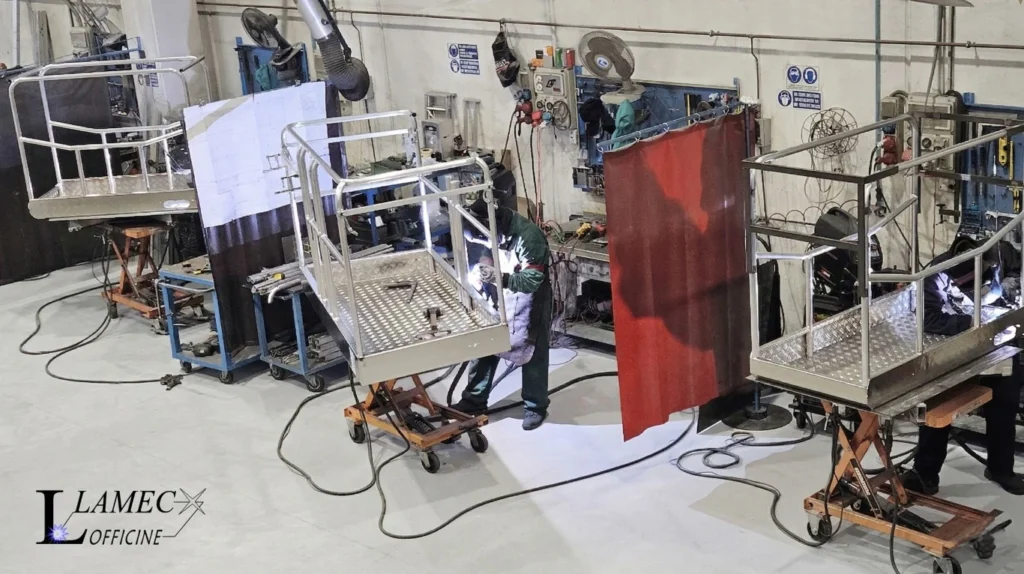
LAMEC is an aluminium welding workshop based in Emilia-Romagna: we weld sheet metal and tubular sections for third parties, from prototypes to production runs, based on drawings or samples. We use TIG and MIG welding techniques and have a Panasonic TAWERS robotic welding cell with a dual-station positioner. The parts are sent for welding from our laser cutting and bending department, which is located in the same factory.
TIG and MIG Aluminium Welding
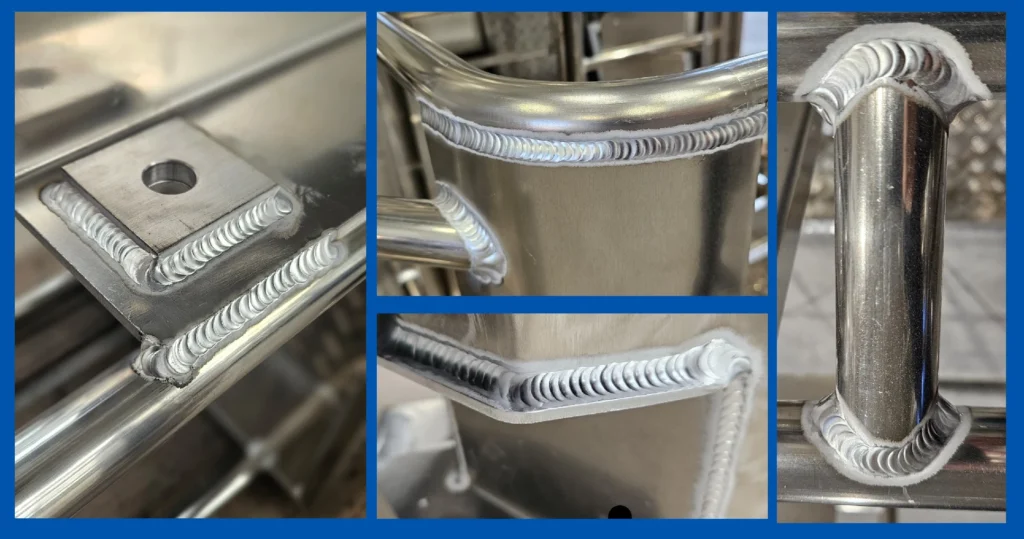
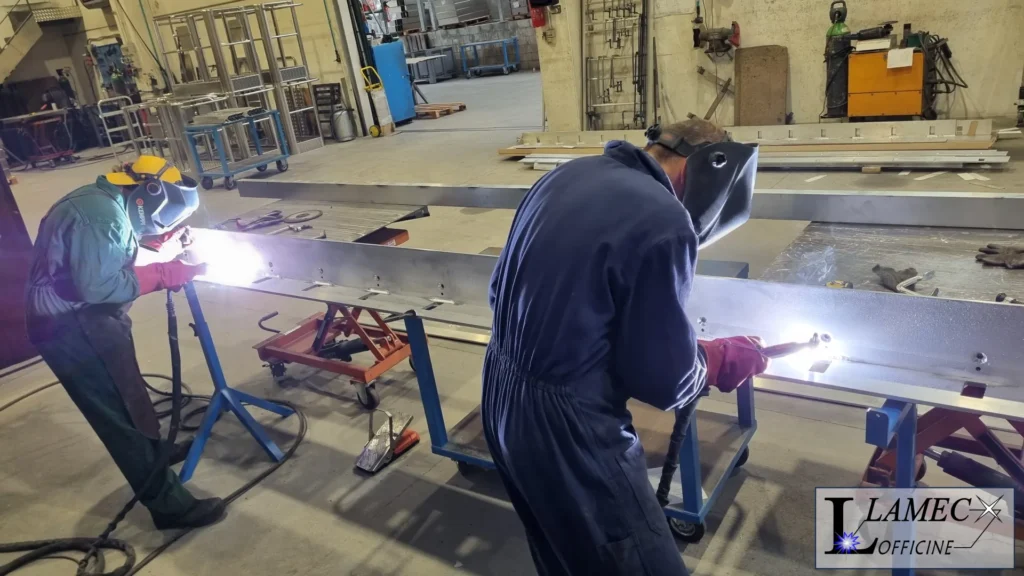
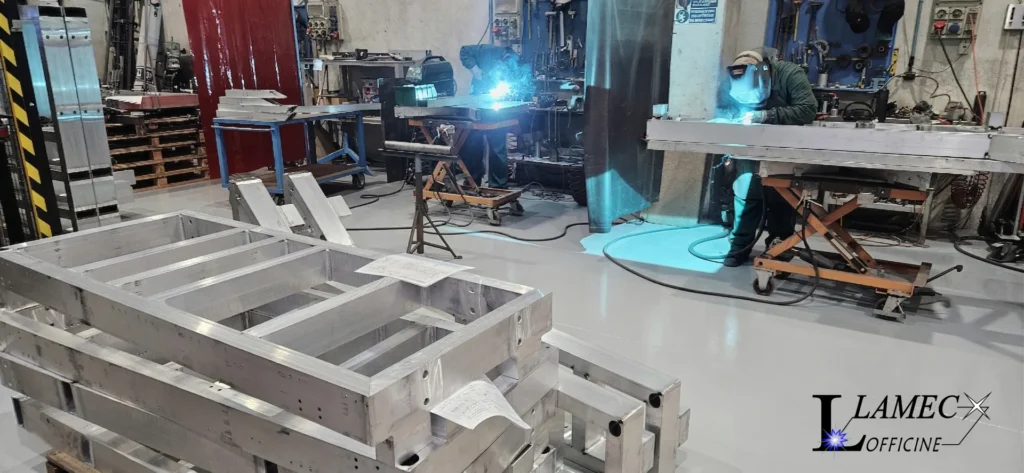
Our welders carry out TIG and MIG welding on aluminium sheet metal and tubular sections.
Welded alloys: EN AW 5754, 5083, 6060, 6082
Thicknesses from 1 to over 20 mm, for all types of joints
The welding is certified to EN ISO 3834-2, which sets out the quality requirements for the fusion welding of metallic materials.
Welders are qualified to EN ISO 9606-2, and procedures are qualified to EN ISO 15614-2.
Each order is linked to a batch of raw material. If the part still needs developing, we work with you on geometry, welding sequence and fixtures, to keep lead times and costs down
From prototype to production
FAQ Frequently asked questions about aluminium welding
What type of welding do you carry out on aluminium? Manual TIG and MIG welding, and robotic welding on the Panasonic TAWERS cell which we use for large, continuous volumes. We manufacture welding fixtures to optimise lead times and increase productivity.
What parts do you weld using the robot? Aluminium parts up to 1,800 mm, on a dual-station positioner with a load capacity of 800 kg per station.
What certifications do you hold? UNI EN ISO 3834-2 — The most comprehensive level of the welding quality standard, covering the entire process: welder qualification, welding procedures, filler materials, equipment and inspection. Welders are qualified to EN ISO 9606-2 and procedures to EN ISO 15614-2, both specific to aluminium.
EN 1090-1 / EN 1090-3:2019 — Certification for structural aluminium components, covering execution classes up to EXC3 for welding and EXC4 for production (non-welded operations). This allows us to supply components with CE marking and the corresponding Declaration of Performance (DoP), as required on construction sites and in projects subject to structural verification. You can download the certificate from the certifications page.
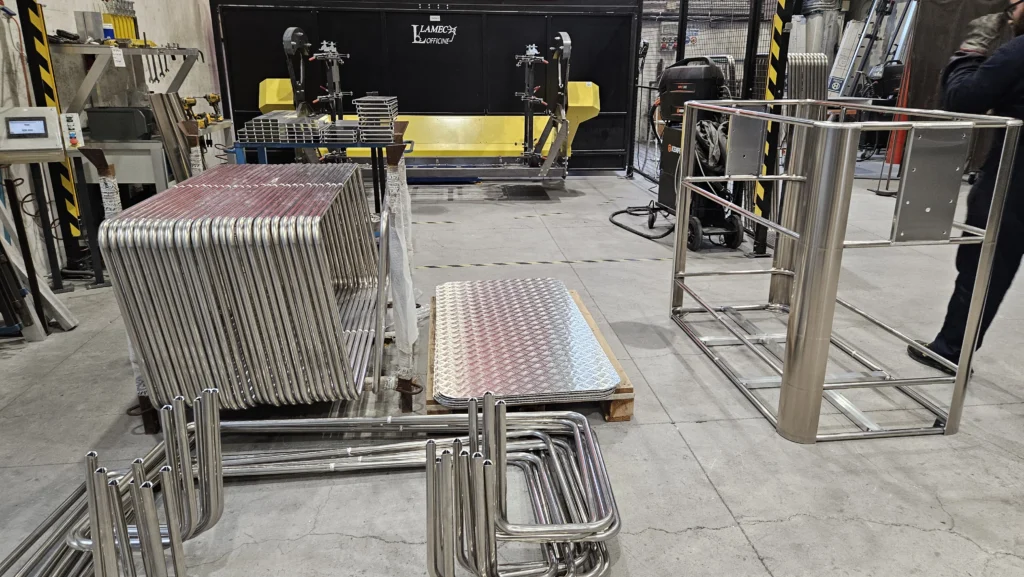
Can you also handle the cutting and bending of parts to be welded? Yes. Laser cutting, sheet metal and tube bending, and welding all take place at our facility, so you place a single order and deal with a single point of contact.
Do you produce prototypes and small batches? Yes, from prototypes to production runs. For large-volume, continuous production runs, we use the robotic cell where possible.
What do you need to quote? A drawing in DXF, DWG or STEP formats, or a sample, along with the alloy and quantity. We’ll reply with a quote and lead times.
Where are you based? In Sogliano al Rubicone (FC), in Romagna. We work for clients throughout Italy and abroad.
Robotic aluminium welding using Panasonic TAWERS Super Active
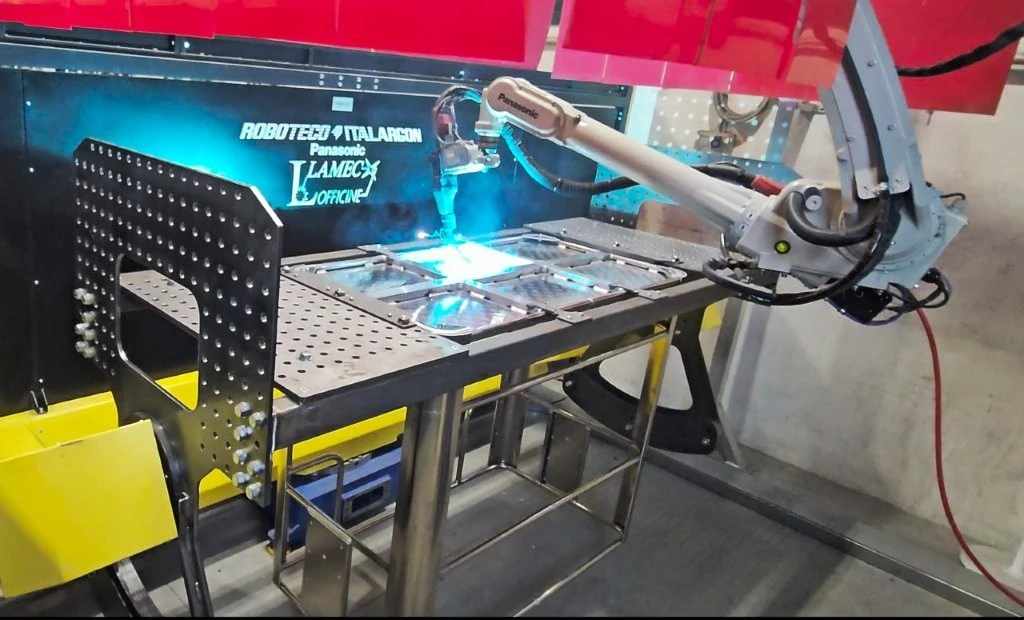
For production runs involving large, continuous volumes – and where the workpiece allows – we weld aluminium using a Panasonic TAWERS robotic cell. The process is MIG Super Active, designed specifically for aluminium: the wire advances and retracts alternately, in sync with the current waveform, and the heat input at the joint remains low. The robot welds on a dual-table positioner whilst it is working on one station, the operator loads the other.
Robot or manual welding?
The robot is used when production volumes and continuity justify the set-up, and the workpiece allows for it. For prototypes and small batches, we continue to use manual TIG and MIG welding carried out by our welders. Depending on the workpiece and quantity, we’ll advise you on the most suitable option.
What do customers get with Panasonic TAWERS?
Less spatter, soot and burn-through. The Active Aluminium process reduces the heat input at the joint and protects the workpiece.
Sheets of varying thicknesses, a neat weld bead. TAWERS Aluminium operates in both pulsed and standard modes, with spiral oscillation synchronised to the welding parameters. It facilitates the joining of sheets of different thicknesses and improves the appearance of the weld bead.
The robot corrects the position of the joint. The 3D contact sensor scans the workpiece with the gas diffuser and detects any displacement of the joint before welding.
Parameters under control. Current, voltage and other process parameters are monitored within set tolerances.
Welding fixtures designed in-house
We manufacture our welding fixtures in-house: they hold the workpiece in place, optimise production times and productivity, and ensure that every batch is consistent.
Robot
Generator
Torch
Process
Positioner
Control
Panasonic TL-2000WG3, 6 axes, reach 1999 mm, wrist payload 6 kg
Panasonic WG-350A, digital MIG inverter integrated into the robot controller, 30–350 A, 10–36 V
Water-cooled, for aluminium, 300 A at 60 per cent, argon
MIG Super Active, TAWERS Aluminium and Active Aluminium; pulsed and standard, with or without spiral weaving
Dual-station, 2,500 mm between centres, 1,700 mm swing diameter, 800 kg per station
A single CPU controls the robot, generator, wire feeder and positioner (9 axes in total)
Request information
Please contact us for information and bespoke solutions for your project